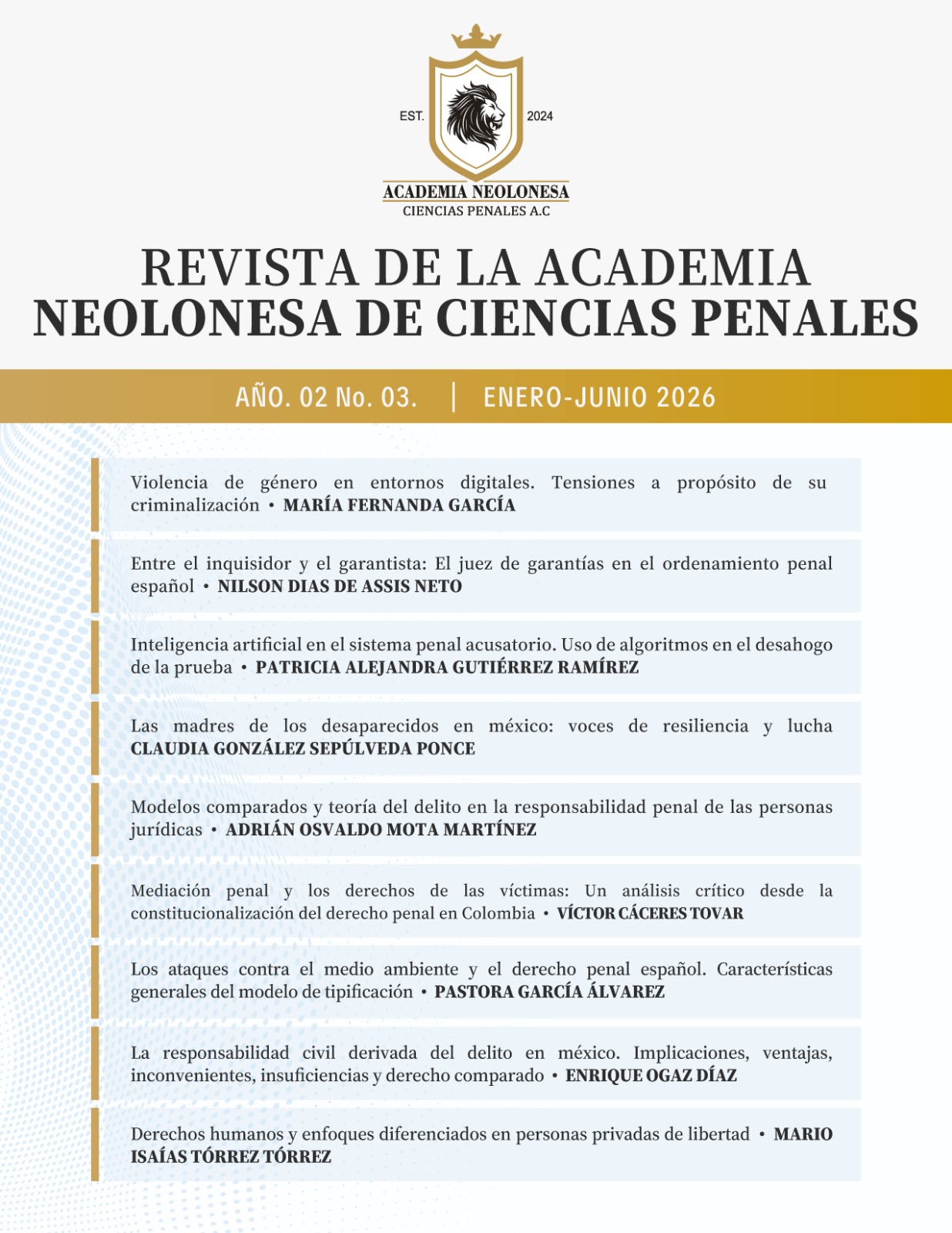
Artificial intelligence in the accusatory criminal justice system. Use of algorithms in the presentation of evidence
Keywords:
Artificial Intelligence, Algorithms, Procedural Law, EvidenceAbstract
This article analyzes the impact of artificial intelligence on criminal procedure, with an emphasis on the transformation of evidentiary dynamics within the Mexican accusatory criminal justice system. Based on a technical review of the nature and functioning of artificial intelligence, it examines the opportunities offered by its implementation, such as the optimization of judicial processes, efficiency and speed in information management and decision-making, as well as the challenges it poses, including the lack of training for legal professionals and the potential impact on fundamental principles of criminal procedure. In general terms, it argues that artificial intelligence should not be conceived as a threat in the strict sense, but rather as a technical tool that, within an appropriate ethical and legal framework, can contribute to strengthening the administration of justice. However, it is important to establish limits and control mechanisms to ensure that the use of algorithms to prioritize investigations and obtain better results does not replace the role of the adjudicating body. The incorporation of artificial intelligence must be based on a balance between efficiency and respect for the guiding principles of the accusatory criminal justice system, avoiding algorithmic bias. This article aims to analyze the adoption of best practices in the administration of justice by responsibly using algorithms to innovate in judicial policy.
Downloads